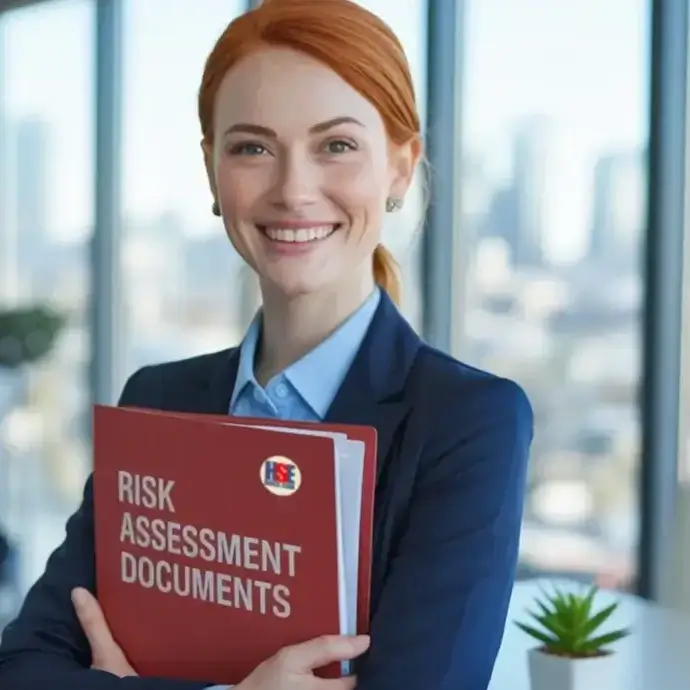
A risk assessment is a health and safety document that identifies potential risks in the workplace and outlines measures to control and minimise the likelihood of injuries.
There should be a risk assessment for every task carried out in a workplace, but this could diminish their value as people may view them as paper exercises and not a genuine reason for concern.
As an example:
If construction workers had to put on safety boots and gloves before going on-site, there should be a risk assessment for each process. A risk assessment telling people to check boots for mice, scorpions, and tarantulas could be created, but it would devalue the purpose of risk assessments.
This course is suitable for all people who prepare food. Upon successful completion, a certificate is awarded that is valid for three years, internationally recognised, and counts towards the FHRS Food Hygiene Rating.
To determine the level of food hygiene training you need, consider your job role and daily tasks.
Front of House & Waiting staff require Level 1 training, as do Portera & Assistants. Chefs and Line Cooks require Level 2 training.
Kitchen Managers & Supervisors need a Level 3 certificate.
Restaurant Owners or Ops Managers need the Level 4.
Level 3 Food Safety and Hygiene training is imperative for anyone who manages or supervises others who handle food or drinks. This includes kitchen managers and supervisors, head chefs, food business owners, managers and supervisors at food retailers and manufacturers, and landlords and pub owners, regardless of whether the premises serve food.
A Level 3 Food Hygiene course teaches everything in a Level 2 course, as well as kitchen hygiene management using the HACCP system to plan, record, and manage appropriate food safety systems and their timescales.
Are you considering taking a food hygiene certificate Level 1 training course but unsure if it's right for you? This blog post will explore who can benefit from this training and whether it suits you.
Food hygiene certificate Level 1 is for people serving meals, delivering or handling prepackaged foods, or handling raw foodstuffs requiring no refrigeration or specific shelf life, such as fruit, nuts, and vegetables; dried rice and pasta; tea bags; herbs and spices.
internationally recognised food safety courses specifically designed for the unique challenges cruise ships face. Our HSEDocs food safety courses provide comprehensive training to help cruise ship operators and staff maintain a safe and hygienic food environment for passengers.
At HSEDocs, we've got you covered with a diverse array of online health and safety training courses. Whether it's an online Manual Handling Course, a Food Safety Level 2 Course, a Working at Height Online Course, an Asbestos Awareness Course, or an online Diversity Training Course, we have the course that suits your needs.
In the past, the emphasis of a manual handling training course was often on lifting a box to obtain a manual handling certificate. Yet, manual handling encompasses a wide range of tasks, including pushing, pulling, carrying, lifting, lowering, passing, bending, twisting, stretching, and yes, even lifting boxes. This scope of manual handling tasks underscores the need for good manual handling training.
Food safety courses are also known as food hygiene courses, but rest assured, they are both the same thing, and their official name is food safety.
Food Safety Level 1: For people who serve food or handle packaged food.
Food Safety Level 2: For people who prepare or handle unpackaged food.
Food Safety Level 3: For people who manage/supervise level 1 and/or level 2 food handlers.
The first step in mastering food safety principles is obtaining the Food Safety Certificate Level 1 or 2.
One of the most common workplace accidents is falling from height, emphasising the importance of recognising specific hazards when working at height and placing safety as the highest priority.
Whether you work in construction, warehouses, or any other industry involving elevated areas, it's crucial to fully comprehend the potential risks and learn how to minimise them effectively. This thorough guide will delve into the essential aspects of safely working at height and equip you with the necessary knowledge to ensure safe practices.
The hallmark of online training is the unparalleled flexibility and convenience it brings to the table for employers, their workforce, and individual learners. This mode of learning allows users to access educational content and resources from any location, provided there is internet connectivity. Such a model is a departure from the rigid timetables of traditional in-person training sessions, granting learners the autonomy to engage with material at times that suit their personal and professional lives.